

Food scales are a handy tool for any kitchen, in both domestic and commercial settings; they are relied upon to ensure accurate measurements when determining the weight of food ingredients. Accurate food measurement is essential with baking, where exact ingredient ratios can affect texture and taste. Food scales can also help with portion control and balanced seasoning. For those focused on health and nutrition, a quality food scale supports meal planning and calorie tracking. And in commercial kitchens, consistent measurements are key to maintaining product quality, meeting food safety standards, and controlling costs.
So whether you’re searching for food scales for your home, or commercial kitchen scales for your business, quality is key — but you also need to make sure you’re buying the right kind of food scale for your particular needs. You can scroll down to learn more, or browse A&D Weighing food scales here.
Why Use a Food Scale?
Food scales offer a slew of benefits, including:
- Precision in Baking and Cooking: Using a food scale ensures precise ingredient measurements, which is especially crucial in baking. Unlike cooking, where measurements can often be estimated, baking relies on exact ratios of flour, sugar, fats, and liquids to achieve the desired texture, structure, and flavor. Even small deviations can affect the outcome of a recipe, leading to undercooked centers, dense textures, or collapsed cakes. In everyday cooking, a scale helps maintain consistency across meals and ensures that seasonings and ingredients are balanced every time you follow a recipe.
- Managing Portion Sizes and Dietary Goals: For individuals focused on nutrition, weight management, or specific dietary plans, a food scale is an invaluable assistant. Measuring food portions by weight provides far more accuracy than relying on volume-based estimates like cups or spoons, which can vary significantly. Whether you’re tracking macros, following a calorie-restricted diet, or managing conditions like diabetes, knowing the exact weight of what you consume helps you stay accountable and meet your health goals with confidence.
- Reducing Food Waste: A kitchen scale can also support more sustainable kitchen habits by helping reduce food waste. By weighing ingredients before cooking, you can avoid over-preparing meals or using more than needed, especially with perishable items. Leftovers can be portioned accurately for storage, and bulk ingredients can be divided efficiently without guesswork. This level of control makes it easier to plan meals, use up existing ingredients effectively, and avoid unnecessary waste, which benefits both the environment and your grocery budget.
- Ensuring Compliance in Commercial Settings: In commercial kitchens, food manufacturing, or hospitality settings, the use of a food-grade scale is often essential for meeting industry standards and regulatory requirements. Precise measurement supports consistent product quality, helps maintain inventory control, and ensures that nutritional labeling is accurate. In environments governed by food safety protocols or standards, exact quantities must be measured and recorded to avoid contamination, meet portion control targets, and maintain compliance with health regulations.
Types of Food Scales
Food scales come in all shapes and sizes; some of the more common varieties include:
- Mechanical Scale: Throughout history, we have developed numerous methods to weigh objects, and one of the most enduring tools is the mechanical scale. This type of scale operates using a spring mechanism: when an item is placed on the bowl or flat platform, the internal spring compresses, moving a dial or needle to indicate the item’s weight. Mechanical kitchen scales remain a favourite among home bakers and chefs for their simplicity, durability, and reliability. They offer consistent performance without the need for batteries or power and can typically measure in both grams and kilograms. Many models include a manual zeroing or “tare” function, allowing users to reset the scale between ingredients without starting from scratch. These scales are often built with stainless steel platforms, which are easy to clean and resist corrosion. Some also come with removable bowls attached to the platform, making it easier to weigh flour, sugar, and other ingredients without spilling, streamlining the preparation process.
- Digital Scale: A digital kitchen scale uses electronic sensors—often strain gauges—to measure weight with high accuracy. When an item is placed on the platform, the pressure is converted into a digital reading, which is displayed clearly on an LCD screen. This makes it easy to read weights quickly and precisely, even in small increments. Digital scales are commonly used to measure ingredients for recipes, portion sizes for meals, or food items for dietary tracking. Most standard models have a maximum capacity of around 5 kilograms and offer precision as fine as 0.1 grams, making them ideal for both culinary and nutritional accuracy. Many digital kitchen scales feature a tare function, which allows the user to reset the weight to zero. This is especially useful when measuring multiple ingredients in the same container—eliminating the need for multiple bowls and minimizing cleanup.
- Large Capacity Scale: While most household kitchen scales have a maximum capacity of around 5 kilograms, a large-capacity scale is designed for users who frequently cook or bake in larger quantities, such as for families, catering events, meal prepping, or bulk baking. These heavy-duty kitchen scales often support weights of 10 kilograms or more, making them ideal for weighing large batches of ingredients, oversized cuts of meat, or full containers of dough or batter. Despite their larger capacity, many models retain excellent accuracy, especially at higher weight ranges, ensuring precise measurement even in bulk. Some versions include a detachable or oversized bowl, which is especially helpful for handling wet ingredients or for mixing as you weigh. Others come with wide, flat platforms suitable for larger pans or trays, offering greater flexibility in the kitchen. Whether you’re preparing food for a commercial setting or a large family gathering, a large-capacity scale helps streamline the process and improve consistency across recipes.
- Portion Control & Diet Management: A food scale is a powerful tool for managing portion sizes and maintaining a balanced diet. By weighing food instead of estimating based on volume or appearance, individuals can ensure they’re consuming accurate portions, which is essential for those following structured meal plans, calorie-counting regimens, or medically guided diets. This level of control is especially beneficial for people with specific nutritional goals, such as weight loss, muscle gain, or managing conditions like diabetes. Whether you’re tracking protein intake, limiting sugar, or ensuring consistency in meal portions, a food scale helps you stay informed and in control of what you’re eating.
Key Features to Consider
Looking to optimise your purchase? Before you buy your next set of scales, try factoring in the following important considerations…
- Capacity & Precision: Always consider how much weight you’ll typically need to regularly measure. For most home kitchens, a scale with a 3–5 kg capacity is sufficient. Keep in mind that this capacity includes both the ingredients and any container (such as a bowl or tray) placed on the scale, so you should factor that into your measurements… unless you have a tare function.
- Tare Function: A vital function in any modern digital scale, the tare function allows you to reset the scale to zero after placing a bowl or container on it. This way, you can weigh only the contents without including the weight of the container. It’s an extremely convenient feature that simplifies multi-step recipes and keeps measurements accurate.
- Unit Conversion: Scales that support both imperial (pounds/ounces) and metric (kilograms/grams) units offer flexibility—especially helpful when following older cookbooks or American recipes that don’t use metric measurements.
- Display & Readability: A clear, backlit display ensures weight readings are easy to see, even in low-light or fast-paced environments. This is especially helpful in busy kitchens or low-light environments.
- Ease of Cleaning: Scales with smooth surfaces, sealed buttons, and removable trays are easier to clean. This helps maintain hygiene and reduces the risk of cross-contamination.
- Heat & Water Resistant: Scales with IP-rated protection or heat-resistant components can withstand splashes, spills, and hot surfaces. Ideal for demanding kitchen or industrial settings.
- Power Source: Options include batteries, USB charging, or mains power, depending on the model. Always choose a power source that suits your kitchen’s setup and usage frequency.
- Size & Portability: Compact and lightweight scales are easy to store and move between workstations. Larger models may offer higher capacity but are less portable.
- Certification (if required): Trade-approved or NMI-certified scales are legally required for commercial selling by weight, as they ensure accuracy and compliance with industry regulations. An absolute must if your food measurements are for commercial applications.
Selecting the Right Scale For Different Uses
Selecting the right kitchen scale depends on how you plan to use it; whether it’s for baking, general cooking, or portion control.
- For Baking: Precision is essential in baking, where even small measurement errors can affect the outcome of breads, cakes, and pastries. A digital scale with at least 1-gram accuracy is ideal, along with a tare function for measuring multiple ingredients in one bowl. A larger capacity is also useful for handling bulk recipes.
- For General Cooking: Everyday cooking doesn’t require the ultra-fine accuracy of baking, but a reliable digital scale with a capacity up to 5 kg, clear display, and simple controls offers consistent performance. Look for models that are durable and easy to clean, especially when dealing with varied ingredients.
- For Specialised Cooking Projects: When preparing large batches—such as for meal prepping, preserving, or bulk spice mixing—a scale with a high capacity (10 kg or more) and the ability to measure fine increments below 1 gram is ideal. These projects benefit from a model that balances sensitivity with strength.
A&D Weighing Recommends the Best Food Scales
For Industrial & Commercial Use
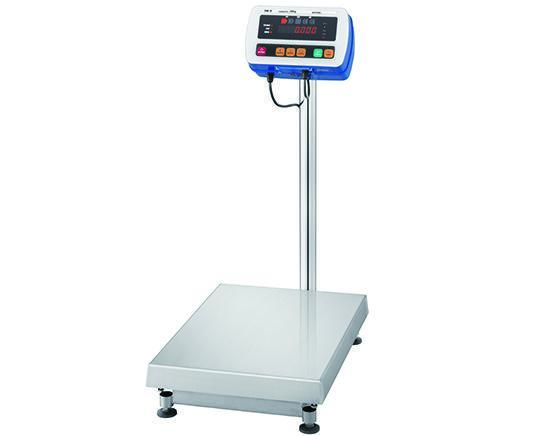
- SW Series Superior Washdown Scales: Part of A&D’s Warrior Range, this heavy-duty bench scale is designed to withstand the most demanding of environments. With an IP69K protection rating, it can endure commercial kitchen conditions that challenge even the most high-quality waterproof equipment. This makes it ideal for areas requiring frequent high-pressure washdowns and intensive cleaning.
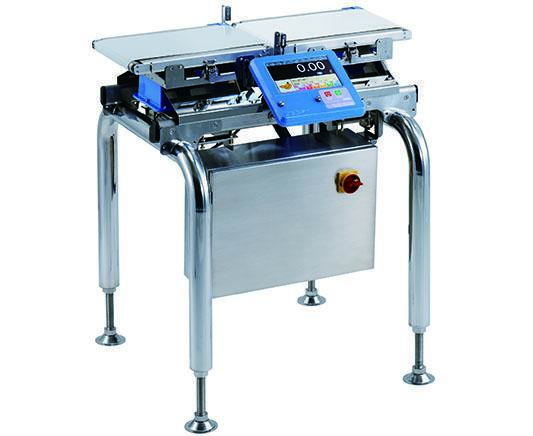
- Inline Checkweighing Scales: If you’re looking for something that can guarantee accuracy in the supermarket trade, then the AD-4961 Series is for you. This high-speed inline checkweigher is designed to automatically weigh, classify, and separate products by weight. Engineered in Japan, it delivers exceptional accuracy, reliability, and performance, and can be seamlessly integrated into existing production lines.
For Both General & Kitchen Use
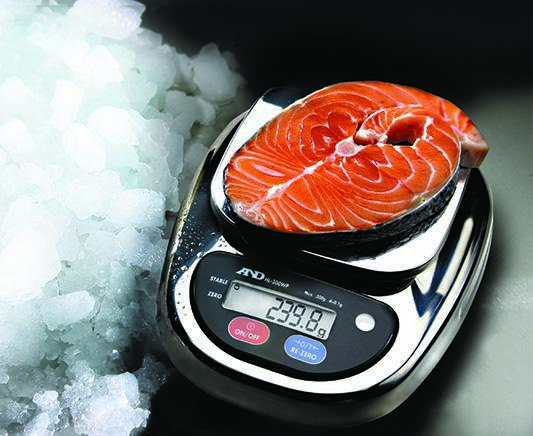
- HL-WP Compact Catering Scale: The HL-WP Series Professional Catering Scale by A&D offers a combination of precision, durability, and user-friendly operation. This sleek device features fully stainless steel top-loading balances and food scales that are built for tough environments. Perfect for food preparation, its capacities range from 300g to 3000g, with increments from 0.1g to 1g. Its waterproof construction and high-capacity capability make it well-suited for demanding kitchen conditions.
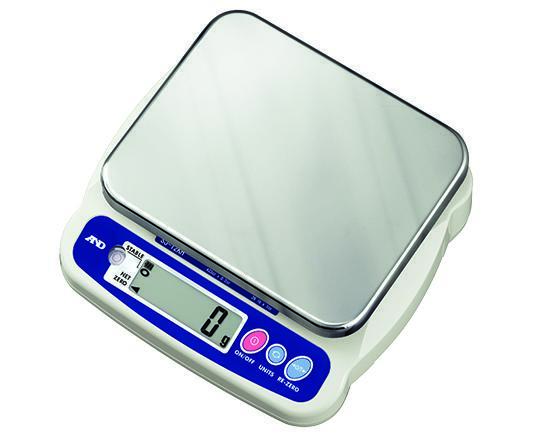
- SJ Compact Bench Scale: The SJ-HS is an affordable bench scale designed for straightforward weighing tasks. The trade-approved SJ Compact Bench Scale offers capacities up to 12 kg and a quick settling time of under one second, making it ideal for product packing needs. Its stainless steel (SUS304) weighing pan is removable for convenient cleaning.
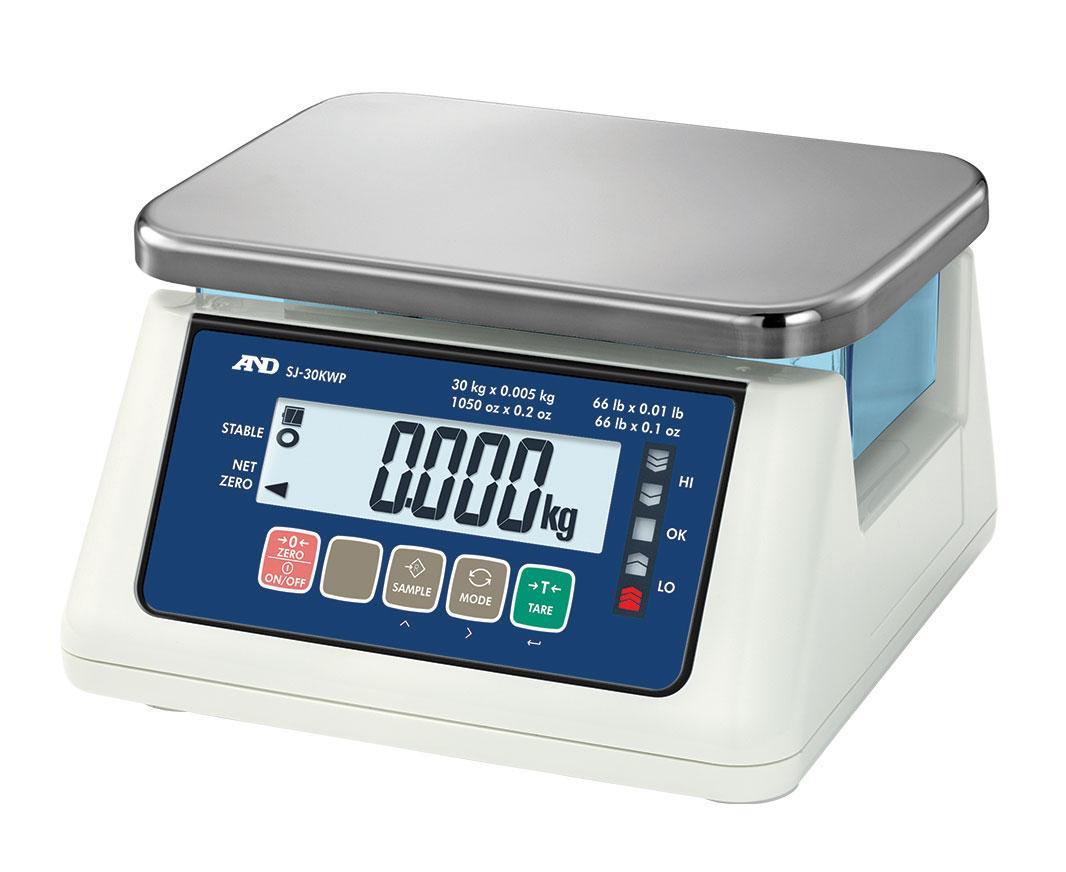
- SJ-WP Compact Traffic Lights Bench Scale: The SJ-WP Compact Traffic Lights Bench Scale is a trade-approved, submersible IP67-rated scale designed for thorough washing in demanding environments. It features an externally mounted load cell for rapid stabilization (under 0.5 seconds) and can operate continuously for up to 5000 hours on 6 D alkaline batteries (with LED and backlight off). The scale includes a large backlit LCD display, bright multi-colored 5-step LED comparator lamps, and an auto-tare function for efficient check weighing. Its touch-sensitive capacitive keys resist damage, while the hygienic stainless steel (SUS304) weighing pan and removable transparent pan support protect the load cell.
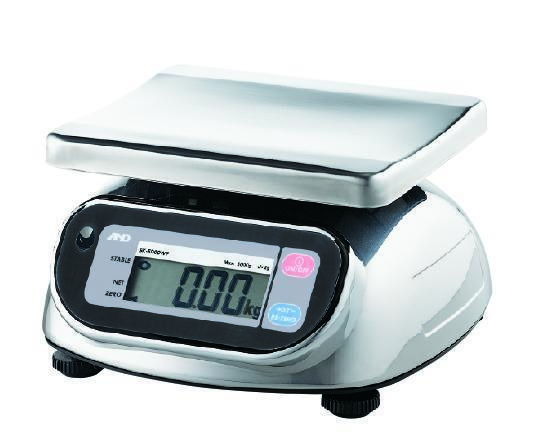
- SK-WP Series Stainless Steel Waterproof Scale: The SK-WP Series Stainless Steel Waterproof Scales feature a durable, hygienic stainless steel body and weighing pan, designed for easy cleaning and dust- and waterproof to IP-65 standards. All models, except the SK-5001WP, are NMI Approved and offer high resolution (1/2000; SK-5001WP at 1/5000). They include a large, clear LCD display, a spacious square weighing pan, and are portable with 6 D-cell batteries. Additional features include auto power-off, low battery indicator, separate power and re-zero keys, and a standard AC adapter (ECTB:200).
Conclusion
Accurate food measurement is essential in both home and commercial kitchens. Whether you’re baking, managing portion sizes, reducing food waste, or ensuring compliance in food service operations, choosing the right type of scale can significantly improve efficiency and consistency. A&D Weighing offers a comprehensive range of high-performance food scales, including a wide range of high quality food scales. With decades of expertise in weighing technology, we support various industries across food production, hospitality, and retail, providing accurate, durable, and NMI-certified equipment designed for professional use. For all inquiries, don’t hesitate to contact us directly via the A&D Weighing contact page.