

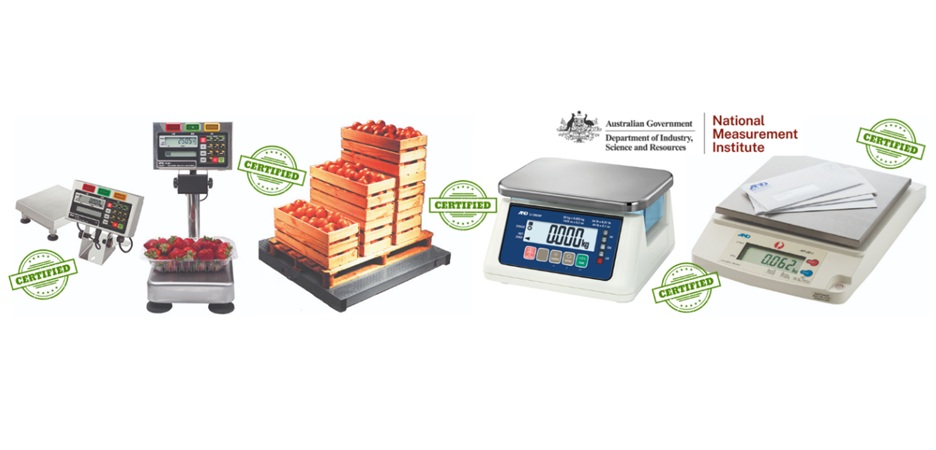
Legal for Trade Scales or commonly referred to as Certified scales, are important in numerous sectors, including retail, logistics, food production, and the trade of precious metals and jewellery. Scales that have been verified by the National Measurement Institute (also known as NMI approved scales) have been designed to meet strict regulatory Australian standards. Ultimately, choosing the right scale is about more than just numbers; it’s about ensuring legal operations, ensuring your customer gets what they’ve paid for, and protecting your bottom line.
What Are Certified Scales?
When looking for the right scale, you may encounter terms such as approved, legal-for-trade, certified, or trade-approved. While the wording can differ, these terms generally describe the same concept: scales that are legally certified for use in commercial transactions where accurate measurement is legally required.
Trade-approved scales and balances are measuring devices that have been independently tested and verified to meet strict Australian or international standards. Certification bodies responsible for this process include the National Measurement Institute (NMI) in Australia, the European Union (EU), the National Regulator for Compulsory Specifications (NRCS), and the National Type Evaluation Program (NTEP) in the United States. These organisations ensure that certified scales are accurate, reliable, and compliant with legal and industry requirements.
The need for certification depends on the application. Common applications where trade-approved scales are mandatory include selling food products, such as fresh produce, meat, packaged goods, dispensing alcohol by volume or weight, prepackaged products that specify a weight on the label, landscaping and bulk materials sold by weight, measuring fuel sales at service stations, postage costs to send parcels, and the evaluation of precious metals, gems, and other high-value commodities to name a few.
Broadly speaking, any scale used for selling goods by weight or calculating charges based on weight must be trade-approved. This includes retail, wholesale, and industrial applications, where inaccurate measurements could lead to financial discrepancies, consumer disputes, or regulatory penalties. Certification ensures that businesses meet legal obligations and provides confidence to both operators and customers that the measurements are correct.
Trade-approved scales play a crucial role in building trust and transparency. For consumers, seeing certified scales signals that the weight indicated is accurate and consistent. Choosing a certified, trade-approved scale is not only a legal requirement in many industries but also a guarantee of accuracy, reliability, and compliance. It protects your business, ensures fair trading, and provides customers with confidence in the measurements they rely on.
What Are Non-Certified Scales?
A non-certified scale is a weighing device that has not undergone the formal testing and approval process required for trade or commercial use. Unlike certified or trade-approved scales, non-certified scales are not legally recognised for applications where official weight measurements are required for buying, selling, or regulatory compliance.
Despite this, non-certified scales have an important role in many industrial, commercial, and operational settings. They are widely used for internal business processes, where precise legal certification is not mandatory but approximate or consistent weight measurements are still valuable. Common uses include monitoring inventory levels in warehouses, in commercial kitchens where precise measurements are important, in gyms and health clinics, in stockrooms, checking bulk materials for production or storage purposes, conducting quality control or batch checks, or performing rough or preliminary weight estimates before final weighing.
Some key benefits of non-certified scales include cost-effectiveness, flexibility, and convenience. Because they do not require certification, these scales are generally more affordable than trade-approved models, making them suitable for businesses needing multiple non-legal scales or temporary solutions. They are also versatile, allowing for use in environments where legal compliance is not an issue but reliable measurements are still needed to streamline operations.
Additionally, non-certified scales can often be easier to maintain or replaced, which makes them ideal for fast-moving workplaces or field applications where flexibility is more important than formal regulatory approval. While they cannot replace certified scales for commercial transactions, non-certified scales are an effective solution for operational efficiency, internal tracking, and supporting day-to-day business processes. In short, non-certified scales provide convenience, and cost savings for internal use, helping businesses operate efficiently without the need for legal verification.
Certified vs. Non-Certified Scales: The Key Differences
| Aspect | Certified/Trade‑Approved Scales | Non‑Certified Scales |
| Accuracy Standards | Subject to strict testing and verification to meet defined accuracy tolerances as required by regulatory authorities such as NMI. Periodic re-verification also ensures that scales and balances maintain their precision, and prevents measurement drift over time. | May be quite accurate — often sufficient for general tasks — but not tested or verified to the same rigorous standard and can drift over time or if misused. |
| Legal compliance / Status for trade | Legally recognised for commercial and trade transactions (selling goods by weight, billing, regulatory compliance). Must carry an approval/verification number (e.g. from the national metrology body). | Not legally acceptable for trade or sales‑by‑weight transactions. Cannot be used where laws or regulations require “legal-for-trade” weighing. |
| Verification & Calibration / Regulatory Testing | Often undergo periodic calibration or re‑verification to maintain compliance. Certification may require periodic inspections, especially after servicing or heavy use. | No regulatory requirement. Calibration is optional, typically used only if the business chooses to maintain internal accuracy or the scale is misused or damaged. |
| Typical Use Cases | Commercial sales by weight such as retail, produce, bulk goods, packaging, fuel, postage, precious materials, contract weighing, food production, logistics, manufacturing and in sectors where meeting legal requirements and maintaining consumer fairness are essential requirements. | Often used for inventory control, checking incoming/outgoing material weights, bulk material monitoring, quality control, internal load checks — where trade‑legal accuracy is not essential. |
| Cost Differences | Often more costly as the number of scales that are trade approved are limited, and the legal certification process, calibration, testing and regulatory compliance add to the purchase and maintenance costs. | Generally less costly, since the buyer can buy any scale if precision is not a key requirement and buyers can also avoid the certification process costs, and associated compliance overhead. |
| Features & Capabilities (Durability, Reliability, Design) | Often built to higher quality standards, with stable construction, reliable repeatability and long-term performance under regulatory compliance demands. | May be simpler in design, with fewer legal/verification features. Typically sufficient for straightforward weighing tasks, often more portable or flexible, but may lack the robustness or long‑term stability of certified units under heavy industrial use. |
When You Must Use NMI Certified (Trade-Approved) Scales
NMI Certified or trade-approved scales must be used whenever goods are sold by weight or when weight determines the price in commercial transactions. This includes retail environments such as butcher shops, delis, supermarkets, and other stores selling loose produce, meat, seafood, or bulk items, as well as businesses selling packaged goods where the weight is verified at the point of sale. Certification ensures the scale has been independently tested and verified to meet Australian national standards, such as those set by Australia’s National Measurement Institute (NMI), and is legally recognised for trade. Using a certified scale protects customers from underweights, protects businesses from regulatory penalties, supports accurate pricing, and maintains fairness and transparency in all transactions.
Certified scales also guarantee that weight measurements are precise, reliable, and compliant with legal requirements. For customers, this builds confidence that they are paying only for what they receive in return, while for businesses it provides legal protection and helps avoid disputes. Non-certified scales, by contrast, can be used for internal purposes such as inventory control, production checks, or where weight estimates are sufficient, but are not legally valid for sales or other trade-related transactions. Choosing the right scale for the application — certified for trade, non-certified for internal use — ensures both compliance and operational efficiency.
When Non-Certified Scales Are Enough
For internal applications, such as monitoring inventory levels or checking bulk materials, a non-certified weighing scale is often sufficient. When cost is a major factor, non-certified scales provide a more budget-friendly solution for businesses that do not require legally certified measurements. For tasks where exact precision is not critical — such as estimating shipment weights or performing general operational checks — a non-certified scale can effectively meet your needs while keeping expenses lower.
How to Choose the Right Scale for Your Business
Selecting the right weighing scale depends on your specific business needs, operational requirements, and regulatory obligations. Understanding the difference between certified and non-certified scales is the first step, as this determines whether legal compliance, accuracy, or internal functionality is your primary concern.
- Costs vs Compliance: Certified scales come with higher upfront and maintenance costs due to testing, verification, and regulatory compliance. However, they are legally required for commercial transactions where weight affects pricing or contracts. Non-certified scales are more affordable and suitable for regulation tasks, but they cannot be used for trade or sales where legal accuracy is mandatory.
- Long-Term Reliability: Because certified scales usually undergo regular calibration, they offer greater consistency and minimise the risk of measurement errors that could jeopardise regulatory compliance or undermine customer trust. Non-certified scales can also be reliable for tasks, but they may not be able to guarantee continued accuracy, particularly under heavy or variable workloads.
Conclusion
Precision in weighing is vital for operational efficiency, regulatory compliance, and maintaining consumer confidence. The choice between certified (trade-approved) and non-certified scales hinges on your specific application: certified models are a legal mandate for retail and commercial transactions, whereas non-certified scales are better suited for internal processes like inventory tracking and bulk estimates. Choosing the right tool ensures you maintain both efficiency and accuracy where it matters most.
A&D Weighing offers a comprehensive range of precision scales, industrial balances, and weighing solutions to meet every business need. From trade-approved scales for retail and commercial use to highly accurate internal-use balances for inventory or production, A&D provides reliable, durable, and compliant equipment. Our services include calibration, maintenance, and expert support to ensure your scales perform optimally over time.You can browse our range of NMI Trade Approved Scales here, and for all enquiries, get in touch with us directly here.